The 2026 Guide to Backlink Indexation: Why Google Ignores Your Links & How to Force a Crawl
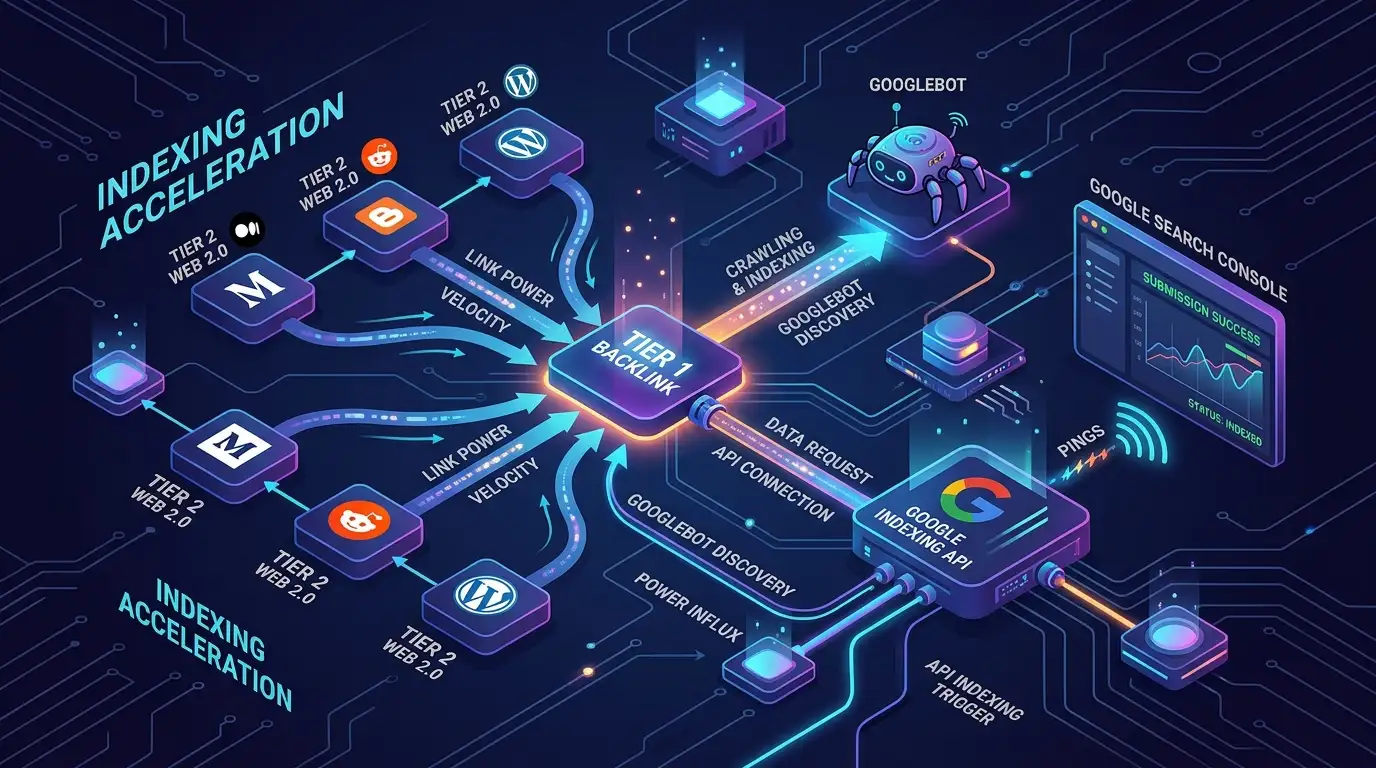
Backlinks fail to index in 2026 primarily because Googlebot aggressively conserves crawl budget by ignoring orphaned pages with zero internal links or social signals. To force indexation, you must deploy a "Tier 2 Velocity Push" by pointing 2-3 high-DA indexed links (like Reddit or Medium) at the unindexed backlink, or submit the URL directly via the Google Indexing API.
⚡ Key Takeaways at a Glance
- Google is no longer a "crawl everything" engine; if a page lacks internal or external authority, it is permanently placed in the "Discovered - Currently Not Indexed" bucket.
- Ping services and indexer tools from 2018 are obsolete and often flagged as webspam.
- Tier 2 link building—pointing strong links at your new links—is the safest and most effective indexation strategy.
- Syndicating a backlink URL on authoritative social channels (Twitter, LinkedIn) forces rapid Googlebot discovery.
You spent hours conducting outreach, negotiating editorial fees, or carefully crafting a Web 2.0 asset. The link is finally live. You wait a week, then a month, but it never shows up in Google Search Console or Ahrefs. The harsh reality of 2026 SEO is that acquiring a backlink is only 50% of the battle. The other 50% is forcing Google to actually crawl, parse, and index that URL so the PageRank flows to your domain.
1. Why Googlebot Ignores Your New Backlinks
Over the past five years, the size of the internet has exploded exponentially due to AI-generated content. To cope with this massive influx of data, Google has aggressively restricted its crawl budget. Search engines are no longer designed to index every single URL they discover. If your new backlink is placed on a page deep within a website's architecture—such as a paginated author profile or a blog post that isn't linked from the homepage—Googlebot simply won't waste resources crawling it. Furthermore, if the page containing your link lacks unique value, has zero inbound links of its own, or is hosted on a low-DA PBN, Google's algorithms classify it as "low priority." Until that page receives an external signal of importance, your backlink is effectively invisible and provides zero SEO value to your target domain.
2. "Crawled" vs "Discovered - Currently Not Indexed"
If you have access to the server logs or GSC of the referring domain, you will typically see unindexed backlinks fall into one of two categories. "Discovered - currently not indexed" means Google knows the URL exists (perhaps they found it in a sitemap), but their crawl queue algorithm decided the page wasn't important enough to actually visit. "Crawled - currently not indexed" is far worse; it means Googlebot visited the page, analyzed the content, and decided it was too low-quality, duplicate, or thin to include in the search index. If a backlink is stuck in the "Discovered" phase, you simply need to send stronger signals to force a crawl. If it's stuck in the "Crawled" phase, the content on the referring page must be fundamentally upgraded or the link should be considered dead.
3. The Tier 2 Velocity Push Strategy
The most reliable, penalty-free method to force indexation is Tier 2 Link Building. This involves building backlinks to your backlinks. By pointing 2 to 3 high-authority, easily indexable links (such as a Reddit comment, a Quora answer, or a Medium post) directly at the URL containing your unindexed link, you force Googlebot to follow the path. Because Google frequently crawls high-DA platforms like Medium, the bot will discover your Tier 2 link, follow it to the target page, and finally index the page containing your primary backlink. This not only guarantees rapid indexation but also multiplies the PageRank flowing through the primary link, making it substantially more powerful when it finally hits your domain.
<!-- Tier 2 Link Flow Architecture -->
[Medium Article (DA 96)] --> links to --> [Guest Post containing your backlink (Unindexed)]
[Reddit Answer (DA 90)] --> links to --> [Guest Post containing your backlink (Unindexed)]
Result: Googlebot follows Medium/Reddit spiders, forcing crawl of Guest Post within 48 hours.
4. Leveraging the Google Indexing API
For advanced technical SEOs, the Google Indexing API offers a programmatic backdoor to instant crawling. Originally designed to help job boards and news sites push time-sensitive URLs into the index, savvy SEOs use it to ping Google whenever they secure a new Tier 1 or Tier 2 property on a domain they control. If you have built a localized Rank and Rent asset on a Google Site or a Web 2.0 platform where you can verify ownership via Google Search Console, you can submit the URL directly via the API. Our RankRoot automation suite utilizes a distributed multi-key architecture to ping these API endpoints automatically, ensuring your hard-earned links are placed in the priority crawl queue the exact moment they go live.
Frequently Asked Questions (FAQ)
Do pinging tools and bulk indexers still work in 2026?
No. Traditional ping services that blast URLs to thousands of low-quality statistics sites have been neutralized by Google SpamBrain. In many cases, using these tools can actually trigger an algorithmic red flag and delay indexation further.
How long should I wait before deploying Tier 2 links?
Wait 14 days after the link goes live. If it hasn't appeared in Ahrefs or Google Search Console (by querying "info:url" or checking your inbound links), execute a 2-link Tier 2 push.

Founder and Lead SEO Architect at RankRoot. 10+ years scaling organic visibility, authority entity engineering, and penalty-immune backlink roadmaps.
Ready to Automate Your 90-Day Ranking Blueprint?
Execute your 10-minute focus mission each day. Generate safe AI anchor text, monitor 404 dead links, and climb into the Top 3.